Featured Article
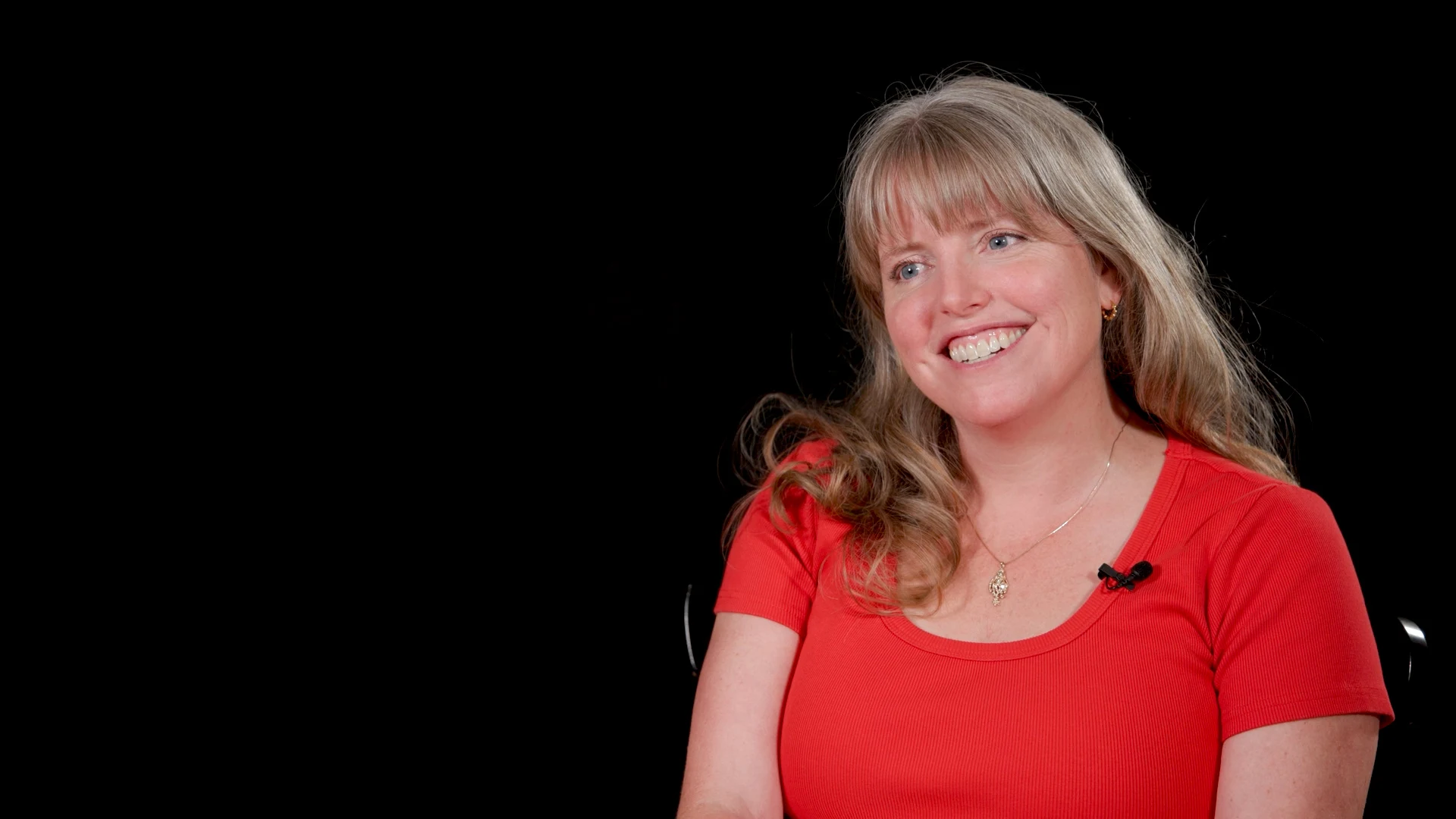
Matriculating with the first VMI class to include women, Melissa (Williams) Krawiec ’01, D.O., Institute physician, wanted what her brother rats wanted out of their VMI experience: A college experience like no other, bonds of friendship forged in the crucible of seemingly endless shared trials, and a rigorous education that would prepare them for lives of purpose.
She got all that and more, and today, on the cusp of celebrating her 25th Reunion this fall, Krawiec is grateful to be in a position that allows her a unique perspective on the Institute—one that encompasses VMI as it is now while recognizing the challenges and successes of the past quarter century on post. Most of all, she’s thankful for her VMI experience, even though it included a number of stressful moments—some unique to her, and others shared by the trailblazing women who matriculated alongside her in August 1997.
“VMI prepared me for the rigors of practicing medicine,” said Krawiec, who stepped into her current role in fall 2023 following the retirement of David Copeland, M.D., who had held the position for 31 years.
“Going forward out of VMI, I was very confident,” she said. “I knew how to speak to people respectfully. I knew how to work in a chain of command. I knew how to stand still and listen when I had done something wrong, and how to take that in.”
The latter perspective was forged, she noted, by multiple transgressions and summonses to the commandant’s office in her rat year. While painful at the time, she acknowledged, in the end, those “specials” were an integral part of developing the ingrained habit of perseverance.
“That’s a really important skill that I didn’t think about as a cadet, but being able to stand up and take your licks, take the feedback, being able to understand when maybe you didn’t do everything perfectly,” she explained. “You spend your first 6 months here never being right. You’re always wrong, and I think, while that is very difficult for the 18-year-old mind and ego to wrap their head around, it is really important because it’s important for you to be able to say, ‘Today wasn’t the best day that I could have had, and tomorrow I’m going to make it better.’ I think that’s a huge benefit to a VMI education.”
Interested in both the military and medicine from an early age, Krawiec had set her sights on serving as a physician in the U.S. Navy. By the time she was in high school, though, the landscape of college admissions was changing rapidly, with the first woman joining the corps of cadets at The Citadel in August 1995. Well aware that doors previously closed to women were opening, Krawiec went to a college fair one night and walked up to the VMI table with a prompting invitation. “Tell me what VMI has to offer me that the Naval Academy doesn’t,” she challenged. “And, as I recall, Tom Mortensen [then-director of admissions] was on his feet, smiling from ear to ear, shaking my hand, telling me to sit down, and he told me all about it. He signed my best friend, my sister, and I all up for an open house that night.”
As they arrived on post from their Woodbridge, Virginia, home, Krawiec and her sister, Sarah Williams ’01, found themselves breaking new ground. “We were the first women to legally stay in barracks overnight at this open house,” she recalled. “I was there, Kim Herbert ’01 was in the room with me—she’s also one of my brother rats—and they put us in a room on the first stoop,” she continued.
The cadets pulled down the shade so Krawiec and her companions could not see what was going on in barracks outside of their room. Then, they announced, “You will not leave this room tonight.” Outside the room, cadets made their displeasure known as loudly as possible.
“There’s all of this total shenanigans, and we’re like trying to peek around the corner of the shade, and we’re like, ‘oh, we want to come here,’” Krawiec shared. “We were these young, confident women who wanted what VMI had to offer.”
The next day, the Office of Admissions team convinced Krawiec that the Institute was the place for her. “They tell you about the honor system,” she recounted. “They tell you about the brother rat spirit. They tell you about the alumni network. What part of that would I not want? And that was it. I was sold. I applied to VMI early decision, and thankfully got in, and my sister did, as well.”
When the Williams sisters arrived on Matriculation Day that August, VMI was in the national spotlight in a way it had never been before, with satellite trucks circling the Parade Ground.
Describing the media attention as “distracting and disruptive,” Krawiec emphasized that while she wanted a VMI education, she wasn’t looking to write her name in the history books by joining the Institute’s first coeducational class. “I was not doing it for fame,” she said. “I was not doing it to be some feminist hero. It was an opportunity to come to this school that had a program that I believed in, and to pursue my education there, and to prove to myself and to those around me that I could do it, just like every other cadet who comes to VMI.”
During the lead-up to Matriculation Day, Krawiec’s father had told her to let the yelling of cadre roll over her “like water off a duck’s back,” and as the Rat Line began, she recalled that phrase over and over again. “I remember really purposefully trying to remember that it was not personal, even when it felt really personal, and so when you’re entering into the game, you understand the rules,” she stated. “I’m there to be yelled at. Cadre is there to yell at me, and I’m there to do what they tell me to do and to try my hardest.”
Within a few weeks, Krawiec’s sister decided that VMI wasn’t for her, and while Krawiec missed her tremendously, she was determined to stick it out. “I had made a decision, and I was headstrong, and I was convinced I could do it, and I don’t think that ever again in my life I’ve been so single-minded about anything else,” she commented.
“It was just something I knew I was capable of and going to do.”
At that time, with women such a novelty on post, Krawiec was determined to meet the same standards as her brother rats. “I was not nervous about getting my hair cut,” she said. “I was excited, and I was excited because everybody else had to do it, and so, by God, if my BRs were going to do it, I was going to do it, and so if they had to wear that uniform, I had to wear that uniform. If they were going to have to do the PT test, I was going to have to do the PT test. My thought was, I can do VMI and not change it for the worse.”
“I can’t imagine my life having not come to VMI. ... I have alumni connections across a huge swath of VMI classes, and those experiences with other alums—they’re so enriching.”
Melissa (Williams) Krawiec ’01, D.O. Institute physician
An Institute Scholar, Krawiec graduated with distinction with a Bachelor of Science degree in biology and then began her studies at the West Virginia School of Osteopathic Medicine. Her path to that school began with a bus trip organized by Col. Wade Bell, Ph.D., then-professor of biology. “Being from VMI has opened so many doors in my life,” she remarked. “I really do believe that it was part of getting into medical school, being from VMI—looking at your application, they understand that you can put up with [anything], and you can thrive in that situation.”
That’s not to say that medical school didn’t come with challenges of its own, but after 4 years in barracks, they were challenges Krawiec was ready to face. “Medical school was a real eye-opener for me academically, and you’re suddenly a little fish in a big ocean again,” she stated. “You’re with a bunch of other kids who were smart enough to get into medical school, and so it was a big eye-opener for me, but also I wasn’t dismayed or thrown off by long hours, lack of sleep, grumpy surgeons, and grueling timelines.”
After graduating from medical school, she completed her internship at West Virginia University’s Charleston Area Medical Center and her family practice residency at the University of New England College of Osteopathic Medicine in Maine. After Krawiec passed her board exams, she worked in family practice and urgent care in and around Portland, Maine, for several years before joining the U.S. State Department in 2011 as a regional medical officer, a foreign service job.
In that position, Krawiec traveled around the globe, with assignments in New Delhi, India, and Warsaw, Poland—and it was in Warsaw that she met her husband, Lukasz. In 2021, the couple settled in Washington, D.C. “Absolute serendipity” is the phrase Krawiec used to describe the chain of events that led to her return to post. In fall 2022, the VMI Alumni Agencies hosted a celebration of the 25th anniversary of the matriculation of women, and Krawiec and her sister attended.
“I was actually at a cocktail reception, and I was having a conversation with General Wins [’85], and my sister was there with me, and she asked him, just sort of as an aside, almost as a joke, ‘Do you ever hire doctors here?’” she said. The next thing Krawiec knew, the superintendent mentioned Copeland’s upcoming retirement, and within a week, she was on the phone with Brig. Gen. Dallas Clark ’99, then-deputy superintendent for finance and support.
Now in her fourth year on post, Krawiec has found that the role of Institute physician is one well-suited to her. “It’s more challenging than I expected,” she said. “You think you’re with a bunch of 18- to 25-year-olds—it’s going to be sick call, that kind of thing, but the cadets really keep you on your toes, and you have interesting medical situations. I medically clear every cadet who comes through our door, and so that’s a very interesting part of my job.”
Krawiec is full of admiration for the “amazing” female cadets who’ve followed in her footsteps. “Seeing the women at VMI today, it just makes me so proud,” she stated. “They are our wildest dreams. I remember being at VMI [as a cadet] and talking about critical mass. We had a lot of meetings and a lot of working groups and discussions about how women can succeed at VMI. … How many women do you need to make VMI a successful place for women? And we talked about, ‘Gosh, can you imagine when we have 100 [additional women].’ Even 50 was out of this world, and now to see the women not just surviving, but absolutely thriving, and really keeping pace or outpacing their male counterparts—it’s amazing to me.”
On Nov. 13–14, Krawiec and her brother rats will gather for their 25th Reunion. Krawiec is in awe of all they’ve achieved, and she’s especially happy to note that one of her brother rats, U.S. Army Brig. Gen. Melissa Adamski ’01, is one of the first VMI alumnae to reach the level of flag officer. It’s been equally rewarding to meet her brother rats’ children who are now cadets.
“My third corporal from when I was a rat, his son is a cadet, and I got to reconnect with him and his wife, and have a coffee and just talk,” said Krawiec. “I remember thinking, ‘I was so scared of this human when I was 18 years old.’ … I’m sure that’s an experience of many alums, to be able to see their BRs through the lens of adulthood, and how a lot of things we were all so worried about when we were cadets kind of fall away because now we’re seeing each other as humans, as other people walking this path.”
That appreciation extends to her dyke’s class, as well. “They were amazing,” she said. “They’re still amazing people, and they really worked hard to get it right, and so looking back on that now I see that.” She’s also seen the truth of the old adage that the more things change, the more they stay the same. “Being back at VMI to work, and sort of seeing how the sausage is made, seeing behind the curtain, you’re seeing what the wizard is doing back there,” she commented. “It is a very different experience, and it is a different VMI than I experienced, but it’s also exactly the same VMI that I experienced. … Cadets still do all the same silly things that cadets have always done.”
Looking back, Krawiec is grateful for her long-ago decision to attend the Institute. “I can’t imagine my life having not come to VMI,” she said. “The alumni I’ve met in the last 28 years or so are amazing,” she stated. “I have alumni connections across a huge swath of VMI classes, and those experiences with other alums—they’re so enriching, being able to see what their lives are like and how they try to grow VMI, how they try to still continue to positively influence cadets and positively influence VMI.”
-

Mary Price Communications Officer – Features
The communications officer – features leads the creation of compelling, mission-driven written content that often supports fundraising and donor engagement efforts. In addition to crafting development-focused communications, this role contributes to the editorial success of key Alumni Agencies publications through strategic, long-form storytelling and by maintaining close working relationships with volunteer leaders.
Victoria Raff Digital Content Strategist
The digital content strategist is responsible for creating compelling, audience-appropriate, multi-channel content for social media, and for monitoring the VMI Alumni Agencies' social media accounts. The strategist supports all communications efforts, including video editing, website updating, and email marketing deployment and training.