On Post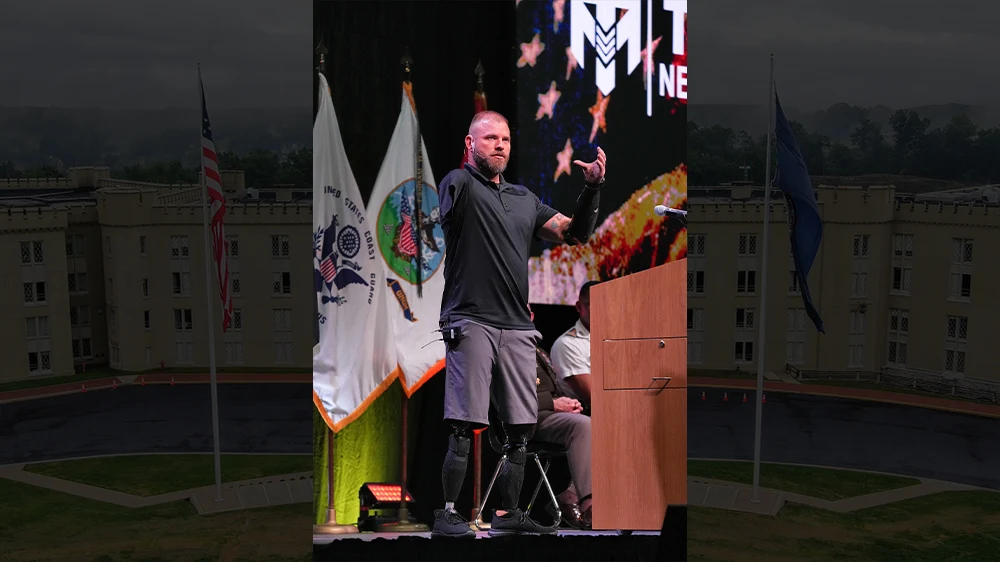
Annual Leadership & Ethics Conference Draws International Delegations
Retired U.S. Army Staff Sgt. Travis Mills speaks in Cameron Hall Oct. 28, 2025.—VMI Photo by H. Lockwood McLaughlin.
Retired U.S. Army Staff Sgt. Travis Mills speaks in Cameron Hall Oct. 28, 2025.—VMI Photo by H. Lockwood McLaughlin.
VMI’s 16th annual Leadership and Ethics Conference, hosted by the Center for Leadership and Ethics, was held Oct. 26–28, 2025. This year’s theme was “Leading with Integrity,” an extension of the CLE’s academic year theme of “American Values.”
The conference hosted nearly 190 participants from many colleges, universities, and military academies from across the nation. Additionally, schools from three foreign countries—Hungary, Poland, and the Philippines—sent delegations.
As the conference opened, Col. Dave Gray, CLE executive director, welcomed the assembly and affirmed that leading with integrity is quintessential to the American experience. “In the 18th century, integrity was linked to sacred, personal honor. That means being very trustworthy, candid with your peers, and of sound moral principle. Throughout his life, despite setbacks that he may have had, [George] Washington gained that reputation both here in Virginia and among the other colonies, and so he was appointed as the commanding general of the Continental Army.” A second example Gray offered was VMI’s most famous graduate, Gen. George C. Marshall, Class of 1901. “Because Marshall was a selfless man, a man of integrity, a man of duty, and had served his country well, Franklin Delano Roosevelt appointed him as chief of staff of the Army during World War II.”
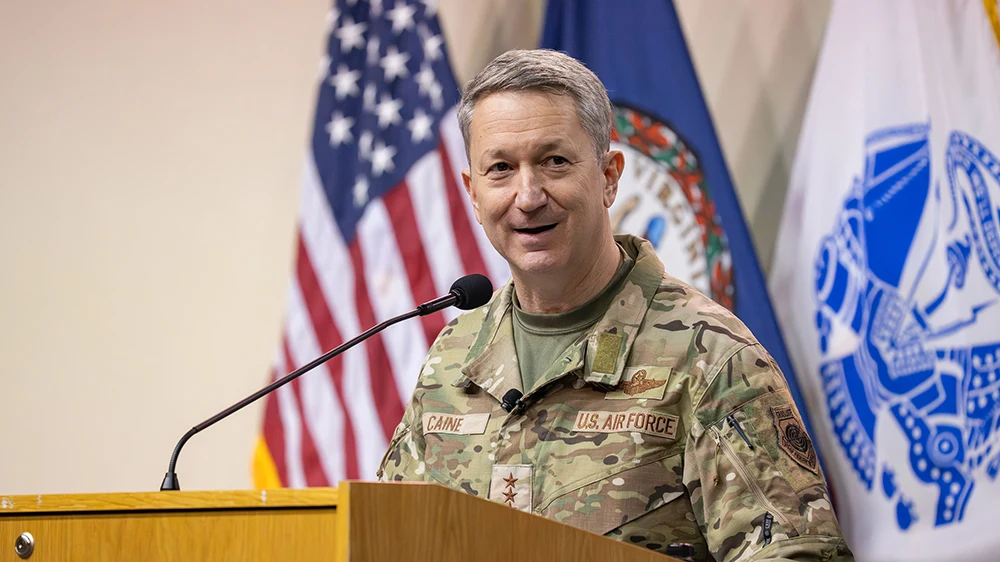
The first guest speaker, U.S. Air Force Maj. Gen. Charles Dunlap Jr., Duke University Center on Law, Ethics, and National Security executive director, spoke on “Becoming a Leader with Integrity: Lessons We Keep Learning.” Dunlap shared that the nature of the nation’s adversaries is now quite different from other times in history. “They don’t share our values, and they don’t believe the law applies to them … We have to worry about nation-states, as well. China and Russia have been replete with activities that challenge the idea of integrity in leadership and honor in war. How can we address that in practical terms?”
That afternoon, conference attendees heard the powerful story of a hostage crisis victim. Moran Stella Yanai, an Israeli jewelry designer, was held hostage in Gaza by Hamas terrorists for 54 days after she was kidnapped from the Nova music festival Saturday, Oct. 7, 2023. Gray led a moderated interview with Yanai, who spoke with courage and candor, emphasizing her personal experiences and not her political viewpoints. Yanai was scheduled to sell her jewelry at the Nova festival, but that morning had second thoughts about leaving her home. “Now I can say it was God’s plan. I was supposed to be there, but I was very stressed. I kept thinking of ways to go back home but was obligated to stay till the end.” At 6:29 a.m., the rockets started flying.
“I served in the army, and I know how to recognize all the sounds. … I had severe panic attacks one after another and couldn’t really act.” A friend insisted they run to the car and drive as fast as possible, but driving proved impossible among all the people screaming and being massacred. Abandoning the car, they ran for hours, struggling to survive. Finally, Yanai hid in a tree, where she was found by terrorists who pulled her down.
She was crammed into a car with 10 terrorists, convinced they planned to drive her to a makeshift gallows to hang her, but she was spared from death that day. “I was counting the miracles that happened to me that day, because I was saved so many times from death. I kept thinking there must be a reason I was surviving.”
Yanai emphasized that she does not harbor ill will but seeks peace and reconciliation. The audience, who had remained silent throughout her heart-wrenching narrative, erupted into an enthusiastic standing ovation when she concluded.
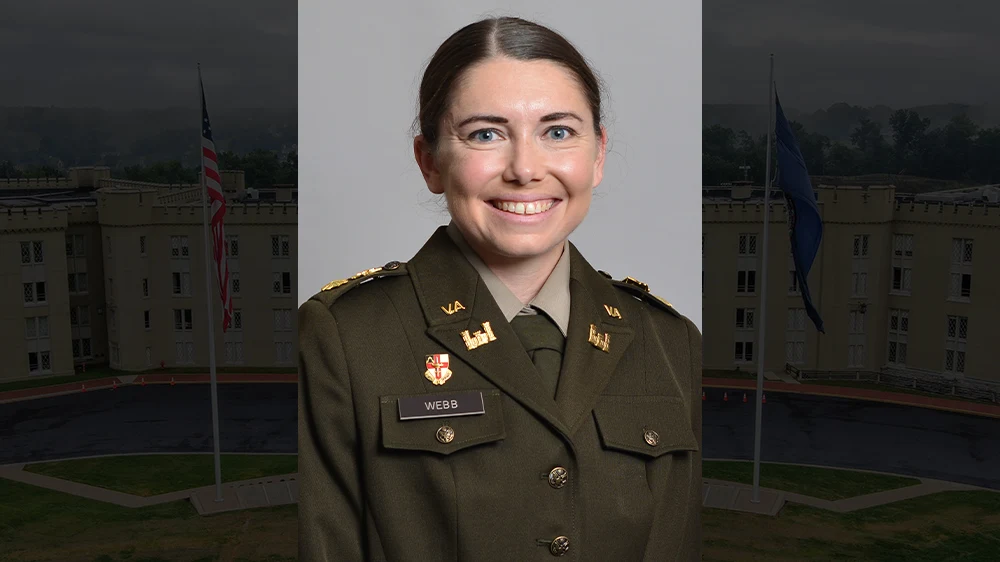
The second day opened with M. Alejandra Parra-Orlandoni, the Caroline Dawn Wortham ’12 Leadership Speaker, a senior fellow at Harvard Kennedy School’s Mossavar-Rahmani Center for Business and Government, whose work focuses on artificial intelligence policy. She shared with the audience about the ethical responsibilities of developing and working with AI. She first discussed the difference between adaptation and innovation. “When I think of adaptation, I think of stepping into a different situation and figuring out how you can still succeed. … When I think about innovation, I think of a situation where you step into the unknown. There is no charted territory.” She stressed that integrity is crucial when assessing new technology.
“Maybe, though, sometimes having friction is important ... those difficult things are what forge who we are.”
M. Alejandra Parra-Orlandoni
Another concept Parra-Orlandoni examined was friction. “Most digital technology is built with this notion of reducing friction, to make everything as easy as possible for the user. Maybe, though, sometimes having friction is important.” As an illustration, she shared that she injured her back years ago and had to undergo hours of physical therapy and discomfort at the gym to restore her strength. “Because of doing that hard, uncomfortable work, today if my dog pulls me and I fall, instead of reinjuring my back, I’m OK. That kind of friction in our lives, those difficult things are what forge who we are.”
The concluding speaker of the conference was the H.B. Johnson Jr. 1926 Distinguished Lecture Speaker, retired U.S. Army Staff Sgt. Travis Mills of the 82nd Airborne Division, who spoke in Cameron Hall to an audience that included the entire Corps of Cadets and guests of the conference. Mills was critically injured by an improvised explosive device while on patrol in Afghanistan during his third tour of duty in 2012, losing portions of both legs and both arms. He is one of only five servicemen from the wars in Iraq and Afghanistan to survive quadruple amputee injuries.
Mills opened his talk with self-deprecating humor to put his audience at ease. “I think jokes really do help to disarm the situation. Knee-slap if you got them. I don’t, but if you do, by all means, feel free.” After the laughter subsided, Mills’ tone turned serious, though still sprinkled with good-natured humor, as he shared his story of being critically injured and his long road to recovery. “We had a minesweeper out front who swept the ground, not once, but twice. He told us it was clear. I took my backpack off and put it on the ground. When it hit the ground, it landed on top of a bomb. When that bomb went off, it tore my right arm and right leg off instantly. My right side was completely gone and never found. My left leg was broken at the bone, and muscle and tendon held it on. My left arm was blown off at the wrist, but I could still use my thumb, index, and middle finger.”
Within 10 minutes, he was helicoptered to the Kandahar Airfield hospital, where nine doctors and seven nurses worked on him for 14 hours. When surgery was over, Mills was a triple amputee. Two days later, the doctors realized Mills’ remaining arm had necrotized and had to cut it off, as well.
He arrived at Walter Reed National Military Medical Center in Bethesda, Maryland, April 17, 2012. There, he was able to see his wife, Kelsey, and baby daughter, Chloe. Having Kelsey by his side gave Mills motivation to overcome his obstacles and to keep a positive attitude. Mills worked hard with his physical and occupational therapy and learned to use his new prosthetic legs and arm in record time. He amazed all his medical providers with the speed of his recovery, his optimism, and his encouragement to other patients going through similar challenges.
Next year’s Leadership Conference will be held Oct. 26–27, 2026, with an announcement of the theme and title coming in the spring.
To stay informed, visit the conference website and join the mailing list here.
Editor's Note: Story originally published by Virginia Military Institute.